The Finality of the Gospel

In July 2014 I wrote about the Gospel being a Gospel of Absolutes, for it is.
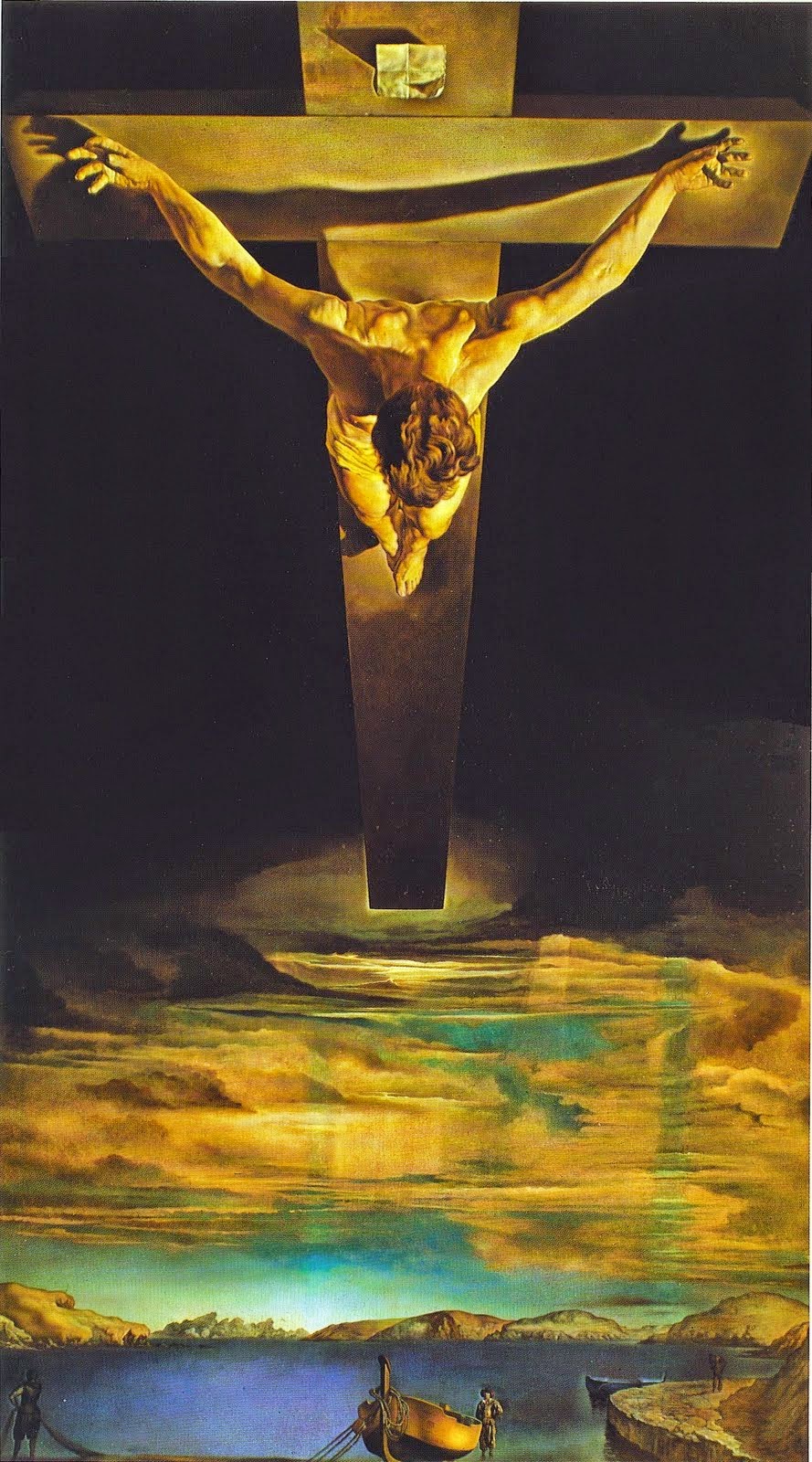
No more so than on the first Good Friday, the day Jesus surrendered His life with the Lion’s Roar “It is finished”. The full passage in the New King James reads:

“After this, Jesus, knowing<sup class="footnote" data-fn="#fen-NKJV-26854e" data-link="[e]”> that all things were now accomplished, that the Scripture might be fulfilled, said, “I thirst!” Now a vessel full of sour wine was sitting there; and they filled a sponge with sour wine, put it on hyssop, and put it to His mouth. So when Jesus had received the sour wine, He said, “It is finished!” And bowing His head, He gave up His spirit.” (John 19:28-30)

There can be no doubt left by the statement John makes in the Gospel. It’s a final declaration of triumph by Jesus.

He knows He has completed the prophecies – there is just one remaining, the drinking of vinegar on the Cross. He knows what is to come. He will become Sin so we may be freed from it’s grasp.

“It is finished”.

There is no ambiguity in His words. He does not say “My part is finished, now look for Mohammed”.

Finished.

Complete.

Finalised.

Some things are just naturally completed. We look for completion in what we read and watch. When a series or movie ends in ambiguity we despair and wait for the sequel.

Maximus kills the evil Commodus then dies. It’s an ending we can get behind. Darth Vader finds redemption by killing the Sith Lord Sidious. And we cheer (although what is about to happen in the movies may well make us groan).

But ambiguity makes us tense. We long for finality. I watched “Stargate SG1” on TV and was horrified when the series wasn’t renewed because the enemy was left in the middle of a storyline. The makers were obviously aware of this and commissioned a TV movie to round it off. When the second “Matrix” movie ended we were on the edge of our seats – Neo unconscious, no completion. No destruction of evil. “The Empire Strikes Back” was just as bad for us.

And that’s the crux. We as humans have an inherent need to see evil defeated. Even before Adam fell we had the need to see evil cast down. Part of the temptation was to be able to tell good from evil. It’s why it was such an effective ruse.

We need to see the enemy conquered. The bad guys need to lose in a way they can’t come back from. It’s built into us. A part of us that is connected with a Holy God in a way that can only be developed in a Holy Relationship – and that was the point Jesus strove to make in His teachings and through His death and Resurrection. It was the point Paul and the other New Testament writers laboured for years to make apparent to their friends, families, enemies and even to us 2000 years later.

We can be Holy again.

King David was an adulterer, a murderer. He had blood on his hands from countless battles. He fell into sin time and time again. Yet he was described as a man after God’s own heart. It wasn’t from his sin that this came, but rather from his desire for relationship with God.

Abraham believed God.

“What then shall we say that Abraham our father has found according to the flesh? For if Abraham was justified by works, he has something to boast about, but not before God. For what does the Scripture say? “Abraham believed God, and it was accounted to him for righteousness.” Now to him who works, the wages are not counted as grace but as debt.” (Romans 4:1-4 NKJV)

Not “Abraham believed in God”. Belief that God exists, even belief oin His almighty power to save us is not enough. An intellectual acknowledgement  of the Truth will not suffice. We must believe God. Trust Him. Accept Him.

Not try to earn His acceptance. That’s folly. The Cross was final.

The Law is completed in Christ, so by trusting Christ was enough for us and believing Him we can confidently ask God for our needs to be given to us and expect to receive them.

This is where false religions get their power. As much as we have a need for finality through our knowledge that God desires us, we have a second need that came with the fall – that we should save ourselves. Cain killed Abel because Abel offered a life for his own – God’s work – where Cain offered grain he had sweated to produce – his own work – and it was not enough. His jealousy led to the first murder.

So it is that we have a desire to earn our way into heaven. Whether it’s by reclaiming the Holy Land like the knights a thousand years ago did, slaughtering thousands in a futile effort to win God’s favour, or the actions of a modern jihadist doing the same thing with the weapons of the 21st Century makes no difference.

Even feeding the poor, clothing the naked and healing the sick are worthless actions if performed simply to say to God “look what I’ve done”.

God simply wants us to look and say:

“Look what Jesus did”.

He gave up Heaven.

He died on a Cross.

All so He could have our company.

The Fly in Atheism’s Ointment

I enjoy talking to atheists. It’s fun watching them scrabble for answers to the truly deep philosophical questions of life. Questions like “How can we know what is morally good” generally confound them. I like challenging a scientist to take all the exact chemicals used to make an acorn and get them mixed in such a way that an oak tree will grow from it.

It amuses me to see the bewilderment in their faces as they realise science can’t answer these questions. Science can’t explain life. No robot will ever be truly self-aware in the way a human being is, no matter how well it’s programmed. “Terminator” is unlikely to happen for real.

These confounding questions are a thorn in the side of atheists. They simply have no answer. Try asking one what caused the Big Bang. Or to prove the theory of evolution. Scientifically it actually can’t be done. It’s a theory. They can show an apparent progression, but there are many links in the chain missing. It requires a deeper “faith” to believe we evolved by chance than it does to believe we were created – by whatever means that creation took place, be it natural evolution or God’s hand at work – which I find infinitely more likely.

Don’t get me wrong. I’m not so far down the fundamentalist road that I think the Earth is only 6000 years old, but I have what I believe is a healthy level of skepticism about carbon-dating accuracy.

Perhaps the answers to some of the “mysteries” of the world are in scripture. Maybe the pyramids were the great store-houses built by Joseph and the Pharoah of the day (possibly Akhenaten who was known to have converted to monotheism of the Aten or Sun-God in the fifth year of his reign) to store seven years of harvest and nothing more. Nobody would paint inside a barn today, so why would then be any different? The suggestion was made in what is considered a work of fiction, Thomas Mann’s “Joseph and His Brothers”, but as with much fiction perhaps there is a certain amount of fact mixed in?

I can’t prove it one way or another, and science seems to not be interested in exploring the possibility as far as my research can tell (although I stand to be corrected).

But the biggest thing I hear is the problem of the world itself. Atheists seem to think Christians in particular – especially fundamentalists – believe this world is as God created it and that He is in complete control. This makes Him out to be a monster. Genocide in the Bible and modern times are all His doing and His will.

They can’t seem to grasp the concept of Free Will.

Free Will, given to mankind represented by Adam in Genesis, was responsible for the murder and mayhem in the world today, not God’s Freewill, but humankind’s. When you say this an atheist will usually ask why God doesn’t correct it. They can’t seem to grasp the thought that God desires us to follow Him willingly, not as automatons like a terminator.

Freewill is the fly in the ointment. The spanner in the works.

If Man has freewill, then the state of the world is mankind’s creation and not God’s. The purpose of Christ , then, becomes exactly what He claimed it to be – a restorative and redemptive relationship-building exercise leading to the eventual vanquishing of evil from humankind in general and the recreation of the Heavens and Earth. If, however, mankind is simply another mammal then we are in deep trouble. Moral decay becomes inevitable and the destruction of this world a mere formality. We have already got the weaponry and mindset to destroy the planet many times over – it is simply a matter of time.

Like most Christians, I prefer to look at the glass as half full. We may be in the final days, but freewill prevents us from destroying everything we have created and everything God left here for us to enjoy while we are here. Long life in this world is listed in the Old Testament as a Blessing for Obedience – although an argument could be made in some cases that God simply doesn’t want those people yet as He wants to give them a chance to repent.

Whatever our personal view, the fly remains in the ointment. Freewill will always be here. Humans and self-awareness go hand in hand, and we all – atheists and deists alike, seek a reason for our being here at all.

Personally I believe it’s a practice for the awesome Relationship we will enjoy in His presence for Eternity.

Vision. Humility. Courage.

The title says it all. The three things we need to live in a state of Victory despite our circumstances.

Vision:

Vision gives us hope. It allows us to see beyond our current circumstances whether it be poverty, ill health, homelessness, divorce, debt or any other adversity that plagues us as believers. It allows us to search for and find refuge from the storms of this world and the attacks of the enemy.

Vision allows us to see, as God says through Jeremiah in chapter 29:11, a hope. A plan. Prosperity not harm. A future.

Vision allows us to see beyond our circumstances.

Those who know me personally know my circumstances. I’ll share some with you all here as it is a part of my testimony. Six years ago in 2009 my life was finally coming together. My wife and I were working hard to build a business which was succeeding to the extent we were able to own our own home, give away to the less fortunate without thinking about it and plan for a baby despite our advancing years.

All that changed 1st April 2010. Routine surgery went horribly wrong for my wife. Infection set in and she became sick to the point of being only days from death when we finally sought a second opinion. The doctor we went to and his team quite literally saved her physical life, but the psychological damage was done, as was the financial. Due to her failing health we had to give away our business – it was incurring debt we could not service and the prayerful decision was to give it over to someone we could trust to offer the same level of care we had offered to our patients. By March 2011 we had some answers. The infection was exacerbated by secondary incurable infections which modern medicine can hold at bay but not yet cure. Weakened, she could not work. As a foreigner in South Africa, a white, male, tertiary qualified and business experienced foreigner I was unemployable at that level of the business world. I took a job in a call center so we had some income, and God provided the balance we needed from most unexpected and unlikely sources.

People we knew to be wealthy beyond our dreams accused us of “temerity” when we asked for assistance. People we could never have imagined could assist us gave out of their lack into our hands and bought us time for my wife to begin to recover.

In time, a vision emerged. A new business which is now growing. But the time was not without cost. We sold our home, our car and everything not nailed down to minimise the strain on us and our benefactors. Tragedy struck in the form of cancer in our family to not one, but two members being struck down within months of each other. It seemed our hopes were in vain, but the Vision remained.

More than that, the vision grew. What began as a medical practice has grown into a medical center with other practitioners operating and cross-referrals going on daily. We all benefit and the vision continues to grow.

So we reach humility:

Humility is the ability to receive guidance and gifts given in Love. Humility is acknowledging our strengths and weaknesses equally bluntly and allowing God to step in and build us in our weakness, provide for us financially and keep a roof over our heads.

He has been faithful in that. We have never been without a home where we have been welcomed and loved, and there is the possibility of more to come if we will humble ourselves to receive it.

Receiving a blessing from others is hard when you’ve always been the conduit in the other direction. Humility gets twisted into humiliation by the accuser. This is simply not the case. To receive from someone giving out of God’s command to them is to Bless that person. It requires the Godly Humility to recognise we cannot do this alone and we need to have help in this world. God moves through people to help us. His Blessings – especially financial ones – come through other people. A place of Refuge is often provided by the most unlikely, or at least unexpected sources. Accepting it is to give a Blessing in return to the giver.

It’s a gift we must learn to walk in to draw close to God.

Finally we have Courage.

Courage is the hardest step. It is the determination to move forwards in the direction the Vision has shown and the Humility has provided guidance for.

But we are often comfortable in our situation. It’s familiar. When Peter walked on the water to Jesus in the storm he acted out of courage. He had the vision that trusting Jesus was the right first step. He had the humility to cry out to Him for help because he could not save himself. He had the courage to step over the side of the boat onto the water.

The other 11 disciples were comfortable in peril. They clung to the boat despite knowing it was sinking. The knew in the raging storm they would die if they didn’t do something extraordinary, yet Peter was the only one with the courage to act on the Faith of God inside him, and as a result he walked on water to Jesus. Even when he began to sink he cried out to Jesus, not to the men in to boat to throw him a line.

Courage despite the circumstances.

Three small concepts at first glance.

Three exceptional steps to getting from drowning in problems to walking on water.

And the best part? Jesus is right there waiting to take our hands and lead us over the troubles to safety.

Rich man and Lazarus in the 21st Century

I love the overtly descriptive way the Amplified Bible tells the descriptions in the story of Dives and Lazarus.

“There was a certain rich man who [habitually] clothed himself in purple and fine linen and reveled and feasted and made merry in splendor every day. And at his gate there was [carelessly] dropped down and left a certain utterly destitute man named Lazarus, [reduced to begging alms and] covered with [ulcerated] sores. He [eagerly] desired to be satisfied with what fell from the rich man’s table; moreover, the dogs even came and licked his sores.” (Luke 16 19-21 AMP)
There’s no doubt about the Worldly social standing of these people. The rich man, Dives in some translations, has it all. Cars, houses, clothes, money. Lazarus has nothing. We don’t know where he came from to be reduced to such a level, but the analogy applies today.
My Grandfather was a preacher, an officer in the Salvation Army during World War Two. He used to lament with me about the people who had material possessions who refused to help those who had lost everything because they didn’t “owe” it to them to help. That was England in the 1940’s.
Here in South Africa in the years since the fall of Apartheid, the gap between the rich and the poor has widened. The rich elite are no longer the white minority, but the veterans of the Struggle who feel they are “owed” or that they “worked for” what they now have. Cars. Houses. Clothes. Money.
There is still minority rule in the “free” South Africa. It’s just now it’s a minority with more melanin in their skin than before.
This isn’t a political rant, it’s a social one. I write about the disparages in South Africa because I live here and see it every day. People drive their cars costing R500k ($50k +/- US) or more past beggars on the street who will probably never have that much over their lifetime, never mind to buy a car, who just want to not go to bed hungry, or just need R5 (50c) to spend the night in a shelter with a bed instead of on the street.
It’s not limited to any social starting place. Victims of poverty in South Africa and the world in general start anywhere. Then something happens. In South Africa it’s often HIV/AIDS or TB or any one of dozens of preventable diseases that can lower people from places they’d worked their whole lives to reach to destitution, losing homes and all the material things including jobs that had kept them able to cope. Now they are the poor, but the rich still don’t see them.
There’s a moral blindness, and in this “tolerant” society, the loss of a recognition of Hell as a real place. As a result, an “everyone goes to heaven” mentality has developed. It’s marked here, but I saw it in England before I moved out here, and I read about it all over the world. There’s Facebook groups declaring themselves to be “Progressive” Christians who teach it. Alarmingly, many of the people who spout this non-biblical nonsense are ministers and even bishops in the various denominations. There’s a sense of telling the masses to keep quiet because they’ll be rewarded in heaven – and the masses buy into it – and the richest that it’s ok to worship their wealth and hoard it up for themselves.
I heard a brilliant teacher say many years ago now “I’ve never seen a hearse pulling a U-Haul”. It makes sense to me. I’ve lived at both ends of the spectrum. Illness several years ago prevented me from working for over two years and before I was 30 I was told by doctors I’d never work again. Government handouts are not huge sums of money, and I had to try to cope. Since then, I ignored the doctors. I trusted God, and He brought me out to a place where I was able to study, get a degree and start my own business. So much for man’s facts.
And it occurred that the man [reduced to] begging died and was carried by the angels to Abraham’s bosom. The rich man also died and was buried. And in Hades (the realm of the dead), being in torment, he lifted up his eyes and saw Abraham far away, and Lazarus in his bosom.” (Luke 16:22-23 AMP)
There’s a warning coming in Jesus’s story. He speaks of Hell and Hades as real places, not metaphor. It is clear from the many references in both the Old and New Testament that Hell is a very real place. Something liberal theology tries to make us dismiss.
 “And he cried out and said, Father Abraham, have pity and mercy on me and send Lazarus to dip the tip of his finger in water and cool my tongue, for I am in anguish in this flame. But Abraham said, Child, remember that you in your lifetime fully received [what is due you in] comforts and delights, and Lazarus in like manner the discomforts and distresses; but now he is comforted here and you are in anguish. And besides all this, between us and you a great chasm has been fixed, in order that those who want to pass from this [place] to you may not be able, and no one may pass from there to us.” (Luke 16:24-26 AMP)
The beginning of the warning. Jesus is making the point that he’d had his reward in this life, not because it is either in this life or eternity, but because having that kind of power that great wealth gives you in the world also gives you a responsibility to help others with it. I’ve met multi-millionaires who live on 10% of their income and give away the other 90% to build shelters, churches, sponsor missions, provide the helpless and downtrodden with their needs on a day to day basis, and after they give away that kind of money they are still millionaires. One in particular whom I met at a conference told me he believed it was his Christian duty to live how he did, and as he began to give, God blessed him back financially faster than he could give it away, so he increased his gifting percentage. His business boomed, so he gave away the profits – and it boomed faster. There was a correlation between the two. Money isn’t a bad thing. I’ve been well off, and I’ve been broke (well-off’s better). The difference only comes with how you use what you have.
And [the man] said, Then, father, I beseech you to send him to my father’s house — For I have five brothers — so that he may give [solemn] testimony and warn them, lest they too come into this place of torment. But Abraham said, They have Moses and the Prophets; let them hear and listen to them. But he answered, No, father Abraham, but if someone from the dead goes to them, they will repent (change their minds for the better and heartily amend their ways, with abhorrence of their past sins). He said to him, If they do not hear and listen to Moses and the Prophets, neither will they be persuaded and convinced and believe [even] if someone should rise from the dead.” (Luke 16:27-31 AMP)
Another of my Grandfather’s quips was “There’s none so blind as them what refuses to use their eyes”.
He was right.
Using South Africa as an example, a now wealthy family who spent time in exile during Apartheid, rubbed shoulders with the likes of Mandela but missed his point completely, can say to a family member struck down with an illness that is a death sentence “we owe you nothing because we worked for what we have” while another member who stayed and resisted in the country can say to the same family member “we owe you nothing because we give this out of love for you. God has blessed us, please let us bless you now”.
The difference? The first worships mammon. The second follows Christ.
Hell is real. I’m not a “turn or burn” preacher. I’m not saying “Give or go to Hell”. But there’s a warning in Luke 16 here telling us if money is our god and we choose to worship it, God Himself will not deny us that choice.
In the meantime, I daresay in a few years we’ll see South African hearses fitted with a tow-hitch for the U-Haul…

Unflinching. Uncompromising. Unashamed.

One of the most disturbing ideas in the church today is that of capitulation. For 2000 years we have stuck to orthodox teaching and beliefs. These orthodox beliefs, however they were delivered, resulted in manifestations such as the Welsh Revival, Asuza Street and many others by not compromising an uncomfortable message to make it more palatable to the “normal” receiver. John Wesley didn’t compromise. Billy Graham’s messages in his crusades were unflinching from the Truth. A myriad of ministers far greater than most in their understanding stood fast 0n the Word without compromise.

Some were ostracized.

Some were martyred.

Some were listened to – eventually.

Most disheartening is the constant bullying from groups – minorities who don’t represent the majority but are far more vocal – regarding the issue of the moment. Right now, sexuality, specifically LGBT, is the headline issue, so it becomes the center of the discussion.

I generally use sexuality as an example as it is the most visible issue right now. A few years ago I would have used self-centered attitudes or financial greed and the worship of materialism as the example, but the movement of the moment is one that the media provokes through the news, the fictional dramas – both secular and Christian publications and productions – which not only don’t accurately address the issue of sin, but advocate that the sin of the moment is somehow different now we are more “enlightened”. The references in scripture we have clung to as a church regarding sexual immorality, greed, selfishness and many other issues have been shredded and new “interpretations” placed to make the watered down gospel acceptable to the masses.

It’s still self-centered behaviour. All sin ultimately is about Self. We can pay lip service to the sin and condemn it, then go home and live as though it has no effect on us. This in itself is shocking. Why are we not reaching out to these people in a way that draws them into the church the way Jesus did? He used unflinching Truth.

What do we do today?

Compromise.

We lower our standards from the ones Jesus set. Unconditional Love extended to all people with change coming as a result of that relationship, not a pathway to it.

Jesus could have come teaching about a liberal “god” who declares he is simply one path to god but there are many.

He could have said “go for it” or “anything goes between consenting adults” when asked about sexuality. He could have taken the woman caught in adultery and executed her. He could have, but He didn’t.  Any of these actions would make a point, and the different actions would make different points. But Jesus takes the eyes off the woman and onto himself. He draws in the sand. Once everyone has their eyes on Him, she is able to cover herself, restoring her modesty. He confronts them by not throwing the stone. He doesn’t ask “Where is the one she was with?” He doesn’t even ask if it was a man or a woman she was with. He will not compromise His stand, and we need to learn from that. His stand is Love, not Judgement. And He refuses to compromise the message to the point of the Cross for us.

Compromise kills the Gospel. It undermines the foundation of what we believe. It forces us to consider a plethora of alternatives that make God’s head spin with despair for us instead of focussing on Him as the solution to all our woes.

We sit with choices. You can’t click on a website without being invited to join a dating service (I met my wife online, so they’re not all bad), but often these sites have links to other sites, and before you’ve clicked a dozen times you’re caught up in a “pornado”. A far cry from the “Over 30’s and single” site you started at. And quite terrifying.

We must be ever vigilant to the attacks of the enemy, but the strongest defence behaviour is to have a strong offensive plan. The way to repel is to soak in the word. If you’re not in a local bible-centred church then find one, or form one with other like-minded bibliocentric individuals with Christ at the center and accountability to one another in the Eldership. Be fully accountable to each other – brutally honest in confessions and non-judgemental in offering support, exactly how Jesus was. Remember He told the Samaritan woman at the well her own life story. Seven husbands and shacking up with number 8 – a man who wouldn’t even give her his name.

Maybe we’re like that. My wife kept her maiden name when we married – mostly. She’s a medical doctor, so it fitted well because she was established in the area, but I long for the covenant to be complete and the change to come, but I don’t force the issue. I compromise. She maintains her original name professionally and I don’t complain. In our personal life it’s more complex as she sometimes uses mine and sometimes hers. It gets confusing.

Compromise in that kind of thing is seemingly insignificant, and ultimately easily overcome.

Compromising our Faith, however, is more fundamental. We need to bear in mind that we have to project an image of Christ as He did. To represent the Whole of God to the people who are seeking Him. It’s a daunting task, like asking a small candle to light a theatre, but if that one candle recruits another and so on, the theatre will be filled with light.

So it is with us. No compromise. Be it greed, lust, gender roles, LGBT issues or whatever is the flavour of the moment. We need to look to history.

The Christian musician Carman once said “when the time comes that people would rather come out of the closet than clean it, it’s the sign the Judgement of God is about to Fall” (“The Standard” Album). We need to push the Gospel agenda.

Not “pro-life” or “Pro-choice” Not some liberal wishy-washy claptrap about everyone can find their own path – and this from ministers. Not demure sunday schools who can’t find it in themselves to teach the children the hard part of Christ in a soft way.

The agenda of the Gospel is No Compromise.

Don’t back down, even if it costs your life. If it takes everything you have, don’t back down. Don’t capitulate. Hold to the promise you were first given when you came to Faith, that Jesus Christ is the same Yesterday, today and for ever. If He’s unchanging, then we need to be unflinching in our resolve.

It’s what all the Martyrs for the Faith in History have done.

So stand your ground when you know it’s God calling you to act a certain way. Invite an unsaved neighbour to church. Perhaps someone invited you. Someone invited Billy Graham. Someone invited DL Moody. Someone invited William Booth, John Wesley and all the other great leaders of history. Our invitation might just be the one that sparks a revival of unprecedented proportions. But take them somewhere the Gospel is taught in it’s fullness. No holds barred. There is a Hell. There is a Heaven. Jesus is returning. And when He does, He will judge us.

Ouch.

He will return ready for a final battle, and whether it’s in our physical lifetime or not, this is the last generation we can personally affect. Use the influence you have wisely, dear friends. Don’t get sidetracked by minutia of irrelevancies and live, breathe and demonstrate the Full Gospel every day.

Without compromise.

Close to Becoming a Christian

A couple of decades ago – yikes – I went to my first Christian Conference, an event called Greenbelt in the UK. The keynote speaker was Dr Tony Campolo, of whom I had never heard but since have come to respect enormously – even if I disagree with some of what he’s said, I still find his teaching provoking and inspiring.

One thing he said back then was that as a lecturer he would be challenged by his students from time to time as to how he could believe in God under the circumstances of the World in its current condition. Pain, suffering, injustice.

He said he would ask those who professed to be atheists a simple question: “describe for me the god you have rejected”.

Almost invariably their answer would effectively describe a leader of the ruling majority government of the day. A truly terrifying thought. The possibility in South Africa that God could in any way resemble Jacob Zuma scares the life out of me. Tony Blair or David Cameron in the UK are no better. For all his wisdom, even the Pope falls short.

But the answer reveals something. It reveals that the person has certain pre-existing notions of right and wrong. It shows that there is a glimpse of what ought to be as opposed to what is.

Stephen Fry, an intellectual man and renowned atheist, whom I also respect for his ability as an actor, his quick wit and his intelligence described in a recent interview the god he rejects. “Why should I respect a capricious, mean-minded, stupid God who creates a world that is so full of injustice and pain. That’s what I would say.” was his answer.

Capricious. Mean minded. Injustice. Pain.

He attributes these qualities to the god he rejects. And well he should. John 10:10 answers the source of this pain: “The thief does not come except to steal, and to kill, and to destroy.” and His answer to it: “I have come that they may have life, and that they may have it more abundantly.”

I reject the notion of a capricious, mean spirited, unjust god. Actually, I accept there is a being that fits the description.

Satan.

But at the moment, Stephen Fry can’t see that. The enemy has done a first-class job in Western Society of convincing the confused of his non-existence. If he doesn’t exist, then all suffering on earth has to have been created as some grand design by the one who did create it.

Oddly, these often highly intelligent people like Stephen Fry and Richard Dawkins, seem incapable of spotting the flaw in their own argument.

If a man has no concept of what a straight line is, how can he declare the line he sees to be crooked [paraphrasing CS Lewis]. They fail to realise that they cry out against injustice from their ivory towers, blaming someone they don’t know or understand an iota of in the form of God, and attributing all the pain and suffering caused by the sin of man through Satan to God. He describes continuous praise and worship as a form of hell in the interview – much as the parody Dudley Moore and Peter Cook film “Bedazzled” (1967) shows it where Cook, playing the devil, has Moore dance around singing praises until he’s bored silly and says “can’t we swap places”. It seems Stephen Fry has this as the image of what heaven will be like – meaning if he has read the Bible, he’s completely missed the point. God’s perfection is designed to complete our self will, not destroy it.

Restoring Creation, the New Heaven and New Earth spoken of in Revelation, is the result of Judgement on Satan and the Love expressed through the Cross. Why would God force anyone who chose to reject that Love to spend eternity living in it? That would be unjust. So He will do what only a Just God can do. He will deny entrance to all who reject Jesus and His Sacrifice.

But I am close to digressing the point.

The description Mr Fry gives of the god he rejects, and the description I give of the work of Satan are almost word-for-word identical.

Perhaps he is closer to meeting Jesus than he realises.

So What if these are the Last Days?

Almost everywhere I turn recently has been posing the question as to us being the final generation before Jesus returns. “Us” is a relative term as we have people alive today born a century ago and others born this morning, so who this “last” generation is is hard to say.

I’m 42 (for now). I have friends in their 60s and 20s. Who is this “last” generation?

Here’s a better question: does it matter?

John Wesley wrote sermons we still read today. St Paul was writing 2000 years ago. But they, and we, have something in common. Right now is the only generation we can truly affect. This generation. Our own. I’m not saying it’s not important whether Christ is returning. It’s critical. Almost all the New Testament books refer to His return as a key event to come, and that it will be a time to be feared and rejoiced over. The times we live in certainly appear to match the signs of the end of the age that Jesus spoke of, but I’m sure for every generation before us there has been a collection of events that seemed to indicate the end was close. The Crusades a thousand years ago to reclaim the Holy Land, the Spanish Inquisition, even events like the Great Awakening or Wilberforce’s bill leading to the end of slavery in the British Empire could have been seen as signs of the end in their day. The Welsh Revival or any of the great periods of growth the church has seen in the last thousand years could have been called a herald of the end.

So what’s special about today’s generation? Why have we suddenly become so preoccupied with the Second Coming? 2012 came and went without any major catastrophe destroying civilization. Every year there’s some nut who is taken with various degrees of certainty declaring the end is near.

I’m that nut.

The End is Near.

So what? What does it matter if we are the final generation? I’m still going to get out of bed in the morning, got to work, talk to people as God leads me to about Him and write here and anywhere else that cares to publish my work whether today is my last day or not.

I learned when my brother died in 1985 that life is short. He was just under ten years old. I learned as I grew in my faith that Life is relative. Life on this planet is short. In the context of eternity it’s less than a heartbeat. In “Holy Man”, Eddie Murphy spoke about the limited number of years we have.

The movie was funny, but it made me think. I’m over half the age my father’s father lived to. My dad died in his 50’s. We don’t know when Jesus will return, and I think that was the point of Him not telling us. Each of us has only a few short years on this planet before we move on to Eternity.

“And this is eternal life, that they may know You, the only true God, and Jesus Christ whom You have sent.” (John 17:3 NKJV)

If that part of Jesus’ prayer its true then Eternal Life starts before we die, through knowing and growing in Him. So why should we worry about the Second Coming? Surely whenever that is scheduled – and remember even Jesus said He didn’t know, only the Father does – we have an obligation as Christians to live today as though Jesus will be here any moment? Perhaps we need to get away from the idea that we may be the final generation and get used to the idea that for the majority of us this is the only generation we will reach.

I’m certainly not famous, and I’m not well known even locally. My writing reaches people around the world through the internet, but realistically very few people really know me. I know very few people. The number of people I keep close fellowship with I can count on one hand, but that doesn’t mean I sit back and give up. After all, Jesus only had 12 when He started.

We need to seek a place where we can influence others with our lives and actions. Anything I write or say is worthless outside the context of my actions. My ability to affect the lives of others is limited by the people I choose to interact with – and that has nothing to do with whether Jesus is returning next Wednesday or not. It has to do with me letting Him grow in me, growing to be more like Him and living my life in the way He would. It means speaking love to my enemies, avoiding sexual immorality – not easy in this world. Hating sin but loving sinners and learning to differentiate between the two.

It means living, and not waiting.

We should wait expectantly for Jesus to return. It’s part of what the first century church did, and it needs to be part of what we do.

But in that 2000 years since Peter and Paul walked in Jerusalem “waiting” has changed. It’s become a passive exercise. Peter spoke on the day of Pentecost under the influence of the Holy Spirit because he was waiting for Jesus. He healed the cripple at the temple gate because he was waiting. Paul wrote the letters and travelled the known world because he was waiting. He was anticipating the close return of Jesus. We wait by sitting at home watching reruns of “Happy Days”. We’ve lost the sense of urgency that biblical waiting implied.

So no, I don’t believe we should focus on the return of Christ as a thing to be expected next week if it will paralyze us. But we need to motivate ourselves to walk and talk in His footsteps so if it is next week we can greet Him and know our friends and neighbours have had the chance because they saw Him in us to invite Him in.

So yes, we are living in the last days before Jesus returns. But we have been for 2000 years.

Let’s live as though this is the last generation we can physically affect – because it is!

Starting again

The writer of Ecclesiastes says there’s a season for all things. I won’t list them all here as I’d need to quote most of the book, but read it and see.

We have seasons in our lives. Times when we go through great triumph and times of great sorrow. Living in a world that has fallen so far from its intended design makes us prone to the pitfalls of depression, anxiety, pain and death we all share. Recently we lost a great comic man, Robin Williams, to depression. What could have been will forever be a question we will ask, but he wasn’t the only one to succumb that day. Many more unnamed and unknown lost the same battle as they couldn’t see past the winter they were in to the spring that could come.

I attempted suicide in 1999 after an exceptionally bad year that saw a lost engagement, cancer and death. I couldn’t see a way out or an end to the winter I was in. So four times I tried to end my life. By mid 2000 I was through the darkest time, and now – fifteen years later – I’ve had seasons of joy and sorrow. Growth and setbacks. It’s hard to imagine, but every day I get the chance to start again.

For a long time I didn’t see it, but we can all say that.

We need to remember to pray, to lean on God through the hard times. Allow His strength to hold us up irrespective of the pain we feel. God is not limited by what we go through. He’s only limited by what we allow Him to do in our lives. Jesus couldn’t do many miracles in His home-town because of the people’s lack of faith, not His.

Starting over is easier than we think when we’re in the middle of the fight. But God is able to overcome any battle we experience. He is bigger than any problem we face. Paul reminds us in his exhortation in Ephesians 3:20 that God “…is able to do exceedingly abundantly above all that we ask or think, according to the power that works in us“.

According to the power at work in us. The amount of power we allow Him to use to turn our life round and get us back on track. A nuclear power plant can generate enough power to fuel a city, but all that power can be used to only light a single 40 watt bulb if we choose. I sit using a computer more powerful than the processors that allowed man to set foot on the moon – albeit with different software – but I don’t use even half of what it is capable of as a writer. Even when I branch out into graphic design, which I’ve done once or twice, it doesn’t tax the power of this machine.

We can turn the power on to start us over again. If a car stalls we don’t just sit in it, we turn the ignition and restart the engine. God calls us to do the same. No matter the issues, the sin, the fall. God sits like the starter-motor or the nuclear power plant just waiting for us to tap into His strength and start over.

We sit and think “I can never start over. Not with my life.” But remember the Prodigal Son. He rehearsed the speech to his father every step of the way home. Ask to be made a servant. Don’t expect more. But his very arrival home and approaching his father as the man had wanted hm to do opened up a welcome above all he could ask or think, just like Paul wrote. The son took the first step and the father bridged the gap. More than he dared ask for. More than he was entitled to. But notice in the prodigal’s story, he allows his father to welcome him home.

We have to do the same.

We need to allow God to welcome us. Taking the first step is often no more than just simply asking for help. Turning back to Him and starting to move towards Jesus again gets our Abba-Father running towards us to throw His arms around us and weep tears of joy into our hearts as we come home. But it begins with us humbling ourselves.

Humble isn’t what we think it is. I’m not taking about self-deprecation here, but simply trying to make ourselves out to be something He didn’t make us – more or less than He made us. Humility isn’t about grovelling, it’s about honesty. And that honesty is the first step to a new start.

I’m not perfect. I’m not even a great example in many ways, but I have learned that starting over is simply a question of accepting I can’t do it alone and I wasn’t meant to. Trying to take my own life and failing allowed God to reach me. I was saved all over again by His mercy when after four tries I turned to Him instead of trying to die. I started living again when I started over.

No, I started living again when I acknowledged I needed to start over. Once I’d done that, actually seeking Him to help me was easy.

In the world’s eyes success is measured by what we have. In God’s it’s measured by how much we’ll trust Him. He longs for us to start over in areas of our lives every day that are not given to Him. My grandfather died at the age of 80 just a week after phoning me to share his excitement at the new things God was showing him after 64 years as a Christian. He was moving in new areas of his life he’d not given over up to the day he went to be with his Lord. Grandad learned to start over every single day.

I want to as well. It’s something we all need to do on a daily basis.

Just start over.

What is Humility?

My personal studies keep coming back to this question recently.

What, according to God, is humility?

Jesus was humble. He walked a miraculous life certainly, but he walked in humility and subject to the Will of His Father. He did only what He saw the Father do. He subjugated His own desires for the desires of the Father – none more so than in Gethsemane where He begged for the cup to pass from Him, but then in humility subjected Himself willingly to the Cross, death and ultimately Resurrection.

He was a man who knew who He was. An example to us of how we are meant to live. It’s a simple acknowledgement of who we are in God’s sight. Nothing more, and nothing less. Just like Jesus.
Godly humility isn’t cowering in a corner whispering “I’m worthless” repeatedly. Neither is it standing at the front of the group declaring how right we are with God. Not necessarily, anyway.
Godly humility begins with knowing who God says you are and living it. Nothing more or less.

In an episode of “The Apprentice” a few years ago, Donald Trump was asked about having paid off the mortgage of someone who stopped to help him when his car had broken down and he had a meeting to get to, or some function. The details of the story are not relevant. His answer is. When the contestant asked him about it, he simply said “Yes I did” and moved onto the next question. No fuss, no drama, just an acknowledgement of an action he had done. He neither played it down nor did he make a big deal of it. I’ve seen Mr Trump come across as extremely arrogant in some cases, but on this occasion he was sincerely humble.

How can we be that way? Obviously we can’t go round paying off people’s debt. It’s not all of us in a position to do so. But we all have a call on our lives that is unique to us. Some are called to write or speak. Some to teach. Some may be asked to lead mass crowds to Christ while others gently shepherd a small flock of souls. Whatever it is we’re called to do, we should do it with all our strength as we are using the gifts God gave us to advance the purpose He made us for.

That’s humility.

There’s no point in making yourself out to be more than you are. Sooner or later it will become obvious what a charlatan you are. Many ministries are destroyed because the central character moves away from the calling they were given and focuses on other things. We are all told to heal the sick, but that doesn’t mean we have a specific healing ministry. We should all share the Gospel of Jesus, but the anointing of evangelist is something different again.

In 1989, Mike Yaconelli gave an amazing talk at Greenbelt festival in the UK called “Cleaning the bog and other spiritual gifts”. I loved it. I bought the tape and wore it out. The following year I was able to buy a copy of the video which I’m trying to get transferred onto DVD. His concept was simple. Our spiritual gift is what we were made to do. Teaching, yes. But cleaning toilets can be a spiritual calling if it’s what God called us for.

“Now in those days, when the number of the disciples was multiplying, there arose a complaint against the Hebrews by the Hellenists, because their widows were neglected in the daily distribution.Then the twelve summoned the multitude of the disciples and said, “It is not desirable that we should leave the word of God and serve tables. Therefore, brethren, seek out from among you seven men of good reputation, full of the Holy Spirit and wisdom, whom we may appoint over this business; but we will give ourselves continually to prayer and to the ministry of the word.”

And the saying pleased the whole multitude. And they chose Stephen, a man full of faith and the Holy Spirit, and Philip, Prochorus, Nicanor, Timon, Parmenas, and Nicolas, a proselyte from Antioch, whom they set before the apostles; and when they had prayed, they laid hands on them.

Then the word of God spread, and the number of the disciples multiplied greatly in Jerusalem, and a great many of the priests were obedient to the faith.”

Acts 6:1-7 NKJV
In this case, serving food was a spiritual calling. It required men filled with Faith and wisdom. The men chosen were happy to do this “menial” task because they were humble enough to recognise they were called to it.
We must be the same.
Whatever your gift is – or mine – we need to seek it with all our hearts and fulfill it with all our strength. Be bold in announcing when asked that God has called us to this work. Don’t put yourself down. It doesn’t befit a child of God. Don’t puff yourself up. It’s ugly and leads to destruction.
Do justly, Love Mercy and walk Humbly with our God.

The Truth You Know…

 So Jesus said to those Jews who had believed in Him, If you abide in My word [hold fast to My teachings and live in accordance with them], you are truly My disciples. And you will know the Truth, and the Truth will set you free.
John 8:31,32
The Truth will set you free.
This article started after a single tweet I stumbled on several days ago. It simply stated “Only the Truth you know can set you free”. I like to dwell on things and let them settle in my Spirit. It’s something several of the most profound teachers I’ve ever heard – well known and local – have drilled into me through their teaching, and something I encourage when I speak, and hopefully when I write.
This thought has been going round my head for some time now. The Truth we know sets us free.
There’s a big difference between intellectual comprehension of the words and truly knowing them when it comes to the Word of God. These days many people have an intellectual faith based on reason and “common sense” rather than meditation and letting the Word seep into their heart and out through their lives. It makes for pew-sitting followers who fill churches but are hollow spiritually. 
They understand the literal words, but miss the point.
We are all guilty of that in most areas to some degree. I have an intellectual understanding that by Jesus’s stripes I am healed, yet I wear spectacles and take medication for diabetes. I have loss of sensation in my feet because of the illness in my flesh. I am still trying to meditate on the verses that speak of physical healing and make them a part of myself to the point that these major issues can be taken care of and see healing in my body. It is working. Part of my testimony is that a “progressive” illness like diabetes is getting no worse in me after 15 years as I truly begin to “know” healing.
Most of us only truly know salvation from an intellectual perspective. It’s apparent in the things we say and do. Our actions reek of death yet we claim life in our hearts. As we mature this changes – hopefully – and we find a peace that calms our fears and silences our worries, even just for short times. Many people do not truly understand until death comes knocking at the door what “peace” really is. My dad died of cancer 15 years ago – 1999 was a bad year for me – and spent much of the last few weeks of his life reflecting on how he’d lived. I held his hand as he passed from this life into the next and could feel him finally letting real peace flow through him just before he died. It was a privilege to be there with him.
 My Grandfather referred to “head knowledge” and “heart knowledge” to differentiate between the two. I like the terms because there is a critical difference between the two. A belief system that goes no further than the mind may as well be atheism. Certainly we need to understand with our minds, but it is our hearts where God seeks us and calls us to know Him.
Truth sets us free. It’s the same in all areas of our life, we just don’t see it for what it is. The truth is the chair will support us, which gives us the freedom to sit. The truth is when we’re thirsty and we have a drink the thirst is slated. So when we find a spiritual Truth it has the same formula to it. A set of rules placed in time by a loving God who wants His children to succeed. The obvious ones, gravity, flight, electricity are in front of us so much we don’t see the faith required to use them. Even something as simple as turning on a switch requires faith that power will flow. God is no different. 
His power is available to us all the time for far more than we can ask, but only in as much as the power is allowed to flow through us. We act as fuses to limit the power, and therefore how much Truth can release us. So we stay sick when health is promised. We stay poor when prosperity – not wealth – is promised.
We hold intellectual concepts of prosperity, health and even freedom. We must allow the fire of the Spirit of God to descend within us to fill every fibre of our being and live lives of Truth-giving Freedom.
Just the way He meant it to be when He made us, and when He chose to accept our punishment so we could recover what our ancestor had surrendered.
True Freedom. True Relationship.